

Winter Camping with Kids: A Real‑Life How‑To Guide
- withloveduquettes

- Jan 8
- 4 min read
Winter camping sounds intimidating on its own... add in kids and it sounds impossible! I know, because I've lived it. I started camping with my kids in 2018 with very little experience, a lot of trial and error, and more than a few lessons learned the hard way (including being woken up by a ranger after not fully putting out a fire 😅)
Fast‑forward a few years and winter camping has become one of our favourite ways to get outside as a family. It’s quieter, slower, and honestly a little bit magical. Snow softens everything. Campgrounds are peaceful. And there’s nothing like watching your kids’ cheeks turn pink as they sip hot chocolate by the fire.
If you’re curious about winter camping but feel unsure where to start, this guide is for you. I’m sharing exactly how we plan, pack, and camp in winter realistically, imperfectly, and in a way that works for families.


1. Choose the Right Type of Winter Camping
Not all winter camping looks the same, and choosing the right style can make or break your experience, especially with kids.
For most families, frontcountry winter camping is the best place to start. These are drive‑in campsites where you can park close to your site, unload gear easily, and bail if you need to (a lot of campgrounds even have electric sites available in winter!)
This is how we started, and it allowed us to focus on learning how to stay warm without adding unnecessary stress.
Other options you may come across:
Cold camping: No heat source inside the tent, relying on layers, sleep systems, and smart planning. (This is what I do most often, except I also bring a space heater so I call it lukewarm camping)
Hot tenting: A tent with a wood stove inside. Cozy, but more gear‑heavy and not beginner‑friendly.
Roofed accommodations: Yurts, cabins, or winterized tents offered at some parks.

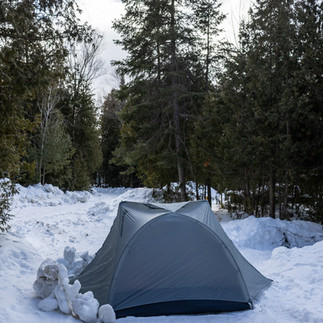


My advice? Start simple. Winter camping doesn’t need to be extreme to be rewarding.
2. Picking a Winter‑Friendly Campsite
Site selection matters more in winter than in any other season.
When choosing a campsite, we look for:
Easy access: Minimal walking from the car - hauling winter gear is no joke.
Tree coverage: Trees act as natural windbreaks.
Proximity to bathrooms: Cold weather bathroom trips are a reality, especially with kids.
Family‑friendly parks: Places like MacGregor Point and Algonquin Park have become favourites for us because they’re well‑maintained and designed with families in mind.
👉 If you’re looking for a specific Ontario example, you can read my full guide to winter camping at MacGregor Point Provincial Park here.
Avoid exposed sites, hilltops, waterfront sites or anywhere that gets heavy wind. Comfort is key, this is not the time to “tough it out.”
3. Setting Up Camp in the Snow

Setting up camp in winter takes longer, plan for that.
When we arrive, the first thing we do is:
Pack down the snow where the tent will go (boots or snowshoes work great).
Level the ground as much as possible, sleeping on a slope is miserable.
Anchor the tent properly. Snow stakes work best, but burying regular stakes horizontally also works.
We also shovel out a small area for cooking and gear storage. Giving kids a “job” (like clearing snow or stomping down the tent area) helps them stay warm and feel involved.
4. Staying Warm: Layers, Sleep & Realistic Expectations
Staying warm isn’t about one magic item it’s about systems.
Clothing Layers
We follow a simple rule:
Base layer: Moisture‑wicking (no cotton)
Mid layer: Fleece or insulated layers
Outer layer: Windproof and waterproof
Kids run hot and cold quickly, so we adjust often. Extra mitts, socks, and neck warmers are non‑negotiable.
👉 I break down how we keep kids warm (day and night) in this post about keeping kids warm on winter adventures.

Sleep Setup
This is where comfort really matters.
Sleeping bags rated below expected temperatures
Insulated sleeping pads (the ground steals heat fast)
Bag liners and extra blankets
Hot water bottles tucked into sleeping bags before bed
One of my kids struggled with sleep when we first started camping, winter actually helped. Better sleep systems + early nights = more rest for everyone.
5. Winter Camp Meals That Actually Work
Cold weather means higher energy needs and kids who are hungry get cold faster.
Our go‑to winter meals:
One‑pot dinners like chili or stew
Oatmeal with nut butter and fruit
Pre‑made meals reheated at camp
Warm drinks throughout the day make a huge difference. Hot chocolate, broth, or tea aren’t just cozy they help regulate body temperature.
Pro tip: Keep snacks accessible in pockets so kids can eat without stopping play.


6. Safety, Comfort & Knowing When to Call It
Winter camping is about being prepared not pushing limits.
Before every trip we:
Check the weather (and have a backup plan)
Pack extra fuel, headlamp batteries, and dry clothes
Review basic cold‑weather safety (frostbite and hypothermia signs)
And this matters most: it’s okay to leave early. A successful winter camping trip doesn’t mean staying the whole weekend it means everyone feels safe and supported.
7. Making Winter Camping Fun for Kids
If kids are having fun, everything else feels easier.
Our favourite winter camping activities:
Snowshoeing and short hikes
Sledding right at the campsite
Snowman building
Campfire stories and marshmallows
We plan fewer activities and build in more downtime. Winter camping is slower and that’s part of the magic.
Final Thoughts
Winter camping with kids isn’t about perfection or expensive gear it’s about preparation, flexibility, and leaning into the season instead of fighting it.
If you’ve been curious but hesitant, consider this your sign to try!
Start small. Stay close to home. And trust that confidence comes from experience, not expertise!
If you want help choosing gear, check out my full winter camping gear guide next.

With Love,
The Duquette's


Comments